Showing posts with label TBR challenge. Show all posts

May 23, 2007

Breakfast of Champions by Kurt Vonneguth


I read my fourth TBR book in one evening at the beginning of May, but couldn`t push myself to write a post about it.

"Breakfast of Champions" is my first ever read book from Vonneguth`s writings. I wasn`t sure if I`ll like it, because I have heard that whether you love or hate Vonneguth, there is no middle way. I think I`ll be the one who love :)

I suppose anyone knows this book, so I won`t repeat the plot. I liked the way Vonneguth tells stories, also in some places I got little but unsatisfied by his sudden change of story - his is swiftly switching between different subjects. One thing I liked the most, is his laughing about things other people take seriously:

There were one quadrillion nations in the Universe, but the nation Dwayne Hoover and Kilgore Trout belonged to was the only one with a national anthem which was gibberish sprinkled with question marks.
Some Vonneguth audio books are waiting for me, so I`m going to dig deeper into Vonneguth world.

Apr 10, 2007

All quiet on the Western Front by Erich M. Remarque


My fourth TBR Challenge book. I`m not sure why I choose it. Maybe because I have read some other books by Remarque and loved Black Obelisk. I have always loved Remarque`s humour and his ability to make reader laugh even in sad moments.

All quiet on the Western Front shows World War I through the eyes of young soldier Paul who dies almost at the end of war. It`s so realistic that it may even get you sick in some parts of novel and make you laugh at others. I have read some other war novels, but this is the most realistic one. It tells what really happens to men who becomes soldiers and what the life is for them.
It`s hard to tell more, You have to read yourself....

Mar 26, 2007

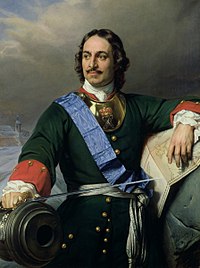
Peter the First by Aleksey Tolstoy


Great novel! I enjoyed every single page of it. It`s so sad that Tolstoy died before finishing it. Anyway it`s very good source of information of 17th -18th Century Russia and its Tsar.
People read about Hitler and Stalin, but they are just egoistic sick men compared with Peter the First. Some politicians could learn a lot from him - how to boost countries` economy and how to make an empire out of sleepy villages:
The boyars and landed nobles, the clergy and the streltsi feared changes which meant new undertakings and new people; they hated the rapidity and harshness of the innovations. "It's no longer a decent world, it's a tavern; they smash everything, they disturb every- one. Low-born little merchants snatch at power. They don't live; they just hurry. The Tsar has delivered the country into the hands of corrupt lechers who have lost the fear of God. We are heading for the abyss."
But those others -- the low-born, efficient men who wanted change, who stretched out their hands, entranced, towards Europe, to grasp even a grain of the golden dust that shrouded the lands of the Occident -- those said that
they had not been mistaken in the young Tsar: he had proved himself just the man they had expected. The disaster and humiliation of Azov had, at one stroke, made
a man of the reveller of the Foreign Quarter; failure had curbed him with a violent bridle. Even his relatives did not recognise him; he was a changed man: fierce, obstinate and businesslike [chapter 7, book 1].
Here what`s said about Tolstoy and his last novel:

Peter the First (1929-45, book 1-2) was a historical novel, which made a strong comeback in the 1930s. It followed the myth of Peter the Great as a progressive ruler who made Russia strong, while also having a heart for the people. Tolstoi did not try to interpret history in a new way but used traditional material. Among his sources were works by the novelist Dmitry Merezhkovasky (1865-1941) and Daniil Mordovtsev, and the historians Vasily Klyuchevsky and Vladimir Solovyov (1853-1900). Peter the First was hailed as the best Soviet historical novel ever written - also in West perhaps due to its apolitical views. However, Tolstoi never managed to finish the third part of the book before his death.

It`s hard to tell where is historical facts and where starts author`s imaginery, so if You want to know more about great Tsar, I advice You to read some other books about him as well:

Massie, Robert K. Peter the Great: His Life and World. New York: Alfred A. Knopf, 1980 (hardcover, ISBN 0-394-50032-6); New York: Ballantine Books, 1981 (paperback, ISBN 0-345-29806-3); 1986 (paperback, ISBN 0-345-33619-4); New York: Wings Books, 1991 (hardcover, ISBN 0-517-06483-9); London: Weidenfeld & Nicolson, 2001 (paperback, ISBN 1-84212-116-2). Pulitzer Prize-winning biography of Peter I.

Hughes, Lindsey. Russia in the Age of Peter the Great. New Haven, CT; London: Yale University Press, 1998 (hardcover, ISBN 0-300-07539-1; paperback, ISBN 0-300-08266-5)

Hughes, Lindsey. Peter the Great: A Biography. New Haven, CT; London: Yale University Press, 2002 (hardcover, ISBN 0-300-09426-4); 2004 (paperback, ISBN 0-300-10300-X).

Peter the Great and the West: New Perspectives (Studies in Russian and Eastern European History), edited by Lindsey Hughes. New York: Palgrave Macmillan, 2001 (hardcover, ISBN 0-333-92009-0).

Troyat, Henri. Peter the Great. New York: E.P. Dutton, 1987 (hardcover, ISBN 0-525-24547-2).

There are more books in Russian.
This was my third book from TBR challenge list.

Mar 20, 2007

Third book finished!

I finished Peter the First by Aleksey Tolstoy. Review will follow soon. Great book, great man! I`m going to search for more books about Peter the First.

P.S. Picked up one additional book (unplaned): "The Life of Charlotte Bronte" by Elizabeth Gaskell. It`s said to be the best biography of this great writter and her family.

Mar 7, 2007

Comfort of Strangers by Ian Mcewan


It`s Ian Mcewan`s second novel, written in 1981. Read this book in February as additional book to my TBR list. In one word - disgusting. It`s the first feeling after I closed this book. BUT! It doesn`t mean that I didn`t like Comfort of Strangers. There is something tempting in it. Maybe it`s slow and gentle atmosphere of Venice, maybe it`s that scary feeling (it`s too good to be true...) in the air almost till the end of the book, when Robert and his wife shows their real faces.

What I couldn`t understand in Mcewan`s novel, was those two families: two Americans, Colin and Mary, tired of themselves, searching for something and two Italians, Robert and Caroline, sadistic and sick persons. I coudn`t understand and still can`t, why Americans went to visit Robert and his wife for second time, if they knew, that there is something wrong with them. I woudn`t go. Robert and his wife I simply despise, but I can understand how they grew to become brutal, sadistic and masochistic.

Anyway, I told here only the surface of the novel. One needs to dig deeper to understand it clearly. For example, Colin and Mary are too close to each other as well as they become childish and it makes them more open to strangers who would interupt their intimacy, Colin is quite feminine and it makes him more suitable for a "victim" role.

5 points to Mcewan for showing dark side of normal everyday life. Not sure if I`ll read another novel of him. I`m afraid, I can imagine how his other novels end......

Feb 21, 2007

Fatu-Hiva: Back to Nature - Thor Heyerdahl

Finished reading my 2nd TBR book already last week and managed to read one additional book in the same evening "Comfort of Strangers" by Ian Mcewan, but about that in next post.

Fatu-Hiva: Back to Nature is great Norwegian traveler and scientist`s Thor Heyerdahl first book. After the wedding, he and his wife Liva travel to Fatu-Hiva, small island from Madagascara island group in Oceania. They hope to find the paradise here. Theoretically it`s possible: almost no civilization, only local indians, lots of fruits, fish and meat, warm climate. In reality paradise is spoiled by people themselves. Europeans have brought ilnesses and vision about consumption. Local people just want to exploit Thor and his wife in terms of money and presents.

From talks with other Europeans in Tahiti and life on Fatu-Hiva there is one conclusion - paradise is where you aren`t :).

Quite short, nice written novel, also not as professional as Ra and other books. Got the feelling like I was travelling with Thor and Liva.

Feb 14, 2007

Into my 2nd TBR book

After some days off and some days reading magazines I have begun reading my 2nd TBR book - Fatu-Hiva: back to Nature. It is entertaining and educating book at the same time. I enjoy it very much, too bad that I don`t have much time in the evenings, so it goes only 20-30 pages per evening.

Jan 31, 2007

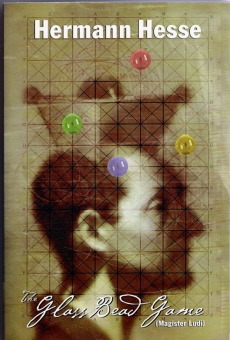
Das Glasperlenspiel - Hermann Hesse (Updated)


Just finished this book :) Review will follow tomorrow hopefully.


____________________________________________________________________

Ok, here comes my review.

I read this book for quite a long time and with pleasure, but still got a feeling of not understanding it completely. So I made a little research about the author and his novel The Glass Bead Game (Das Glasperlenspiel).

Hermann Hesse (1877 - 1962) is German poet, writter and painter. He got Nobel prize in Literature in 1946. The Glass Bead Game is on of his most well known writtings. H. Hesse was interested in theological writtings, Greek mythology, got inspired by Shopenhauer and budhism. He was stronply against nazis and war.

He started The Glass Bead Game already in 1931, first published in 1943, Swiss. When nazis banned his writtings, this novel served as spiritual haven from political conflicts and war. It is his last novel as well.

The Glass Bead Game tells about intelectuals living in fictional province in 23rd Century called Castalia. Do mind, that novel isn`t science fiction! Intelectuals live in monastic order, mainly care only about different arts - music, philosophy, mathematics etc. Glass bead game - the greatest art of them all - is about connection different usually not connected disciplines in reality, for example music with arhitecture. The best of Game players becomes Magister Ludi. Main character Joseph Knecht is very talanted student and Castalia`s citizen. He becomes Magister Ludi and is brilliant at his work, but with time he understands, that he needs to do more, do something else to help the real world understand and love Castalia (if real world will lost it`s need in those spiritual workers, it wil be end of Castalia. So he resignes from his position and leaves Castalia to teach his friend Designori son. Tragedy lies in the obstacle that Castalia has made him unsuitable for his longed real life...

To what conclusion I came? The Game symbolize the ways how humans construct realities; to understand the reality one needs to understand many things, questings, sciences etc. and has to be able to connect cause with results. Besides, this book is much about following one`s destiny and fulfilling it.

As I said previously, this book is like real chokolate. To really get the taste, one needs to read slowly. H. Hesse uses long sentences, references to other musical works and writtings as well as rich language. I read this book in my native language (so I`m not able to write down some quotations, sorry for that) and I shall say that I didn`t know many words :D

Not everyone will like this book. Some will put it back in shelf not getting through first fifty pages about what is Castalia and glass bead game (these ones were boring for me....).